
Low Maintenance Landscape Design: A Beginner-Friendly Guide for Niagara Homeowners
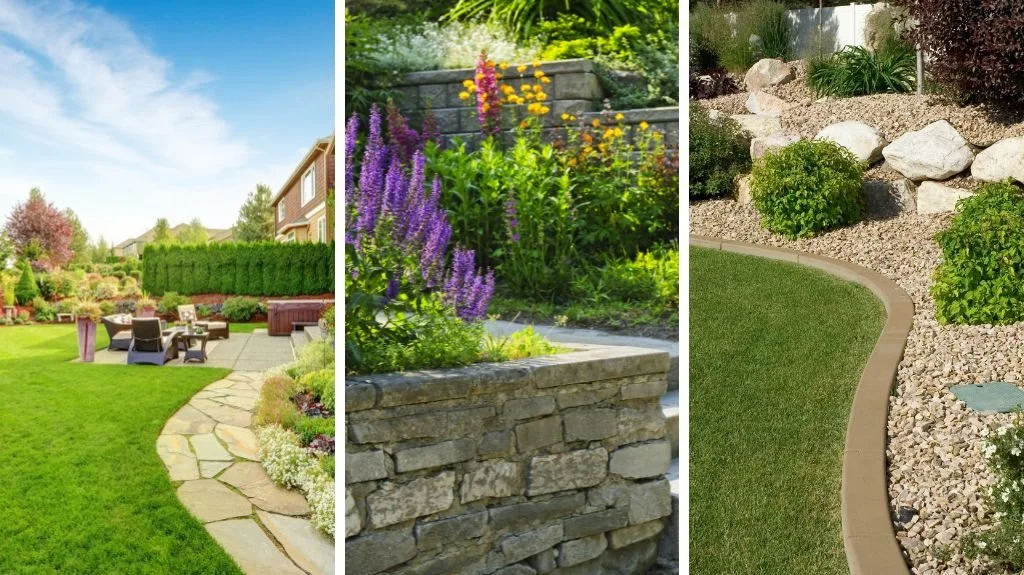
Creating a beautiful yard does not need to feel overwhelming. With a simple plan, the right plant choices, and a focus on low-maintenance landscaping, even beginners can design an outdoor space that looks polished and is easy to care for. In this guide, we will walk through straightforward landscaping ideas for Niagara homeowners, including plant selection, layout tips, and beginner-friendly design strategies.
If you need help choosing the right plants for your yard, visit Gauld Nurseries for personalized recommendations and expert advice tailored to Niagara’s climate.
"We would highly recommend Gauld Nurseries. We've used them over the past several seasons and have been beyond satisfied each and every time. From Alex's and Paula's expertise and knowledge in planning to the many hard working crews. Everyone is professional, courteous and efficient. We absolutely love spending time outdoors enjoying the beauty of their work. They've truly transformed our yard which brings us so much joy.
There is no else we would rather call. Thank-you Gauld!"
- Lucia L
"Great place to shop! The staff is super helpful and knowledgeable. I was having trouble finding the right trees and shrubs for my yard and the staff were amazing at helping me make the right choices. If you want knowledgeable people to help with your garden needs shop at Gaulds!"
- Jack Ashcroft
Key Takeaways
Landscaping does not need to be complicated, and starting with a simple plan makes the entire process more manageable for beginners.
Defining clear goals early helps you understand how your yard should function, look, and feel before choosing any plants.
Choosing a few focal plants first creates structure and makes the rest of your landscape design easier to build around.
Layering plants by height (tall in back, medium in the middle, low in front) creates a more professional and balanced appearance.
Focusing on low-maintenance, Niagara-hardy plants reduces long-term upkeep and improves plant success rates.
Simple yard layouts based on size (small, medium, or large) help create organized, functional, and visually appealing spaces.
Avoiding common mistakes like overcrowding, overcomplicating designs, and ignoring sunlight conditions leads to better long-term results.
Visiting a local expert like Gauld Nurseries can make plant selection easier and more reliable.
Low Maintenance Landscape Design
1. Start with Your Landscaping Goals
One of the biggest mistakes beginners make is choosing plants before thinking about how they actually want to use their yard. Starting with clear landscaping goals helps simplify decisions and prevents you from creating a space that becomes difficult or expensive to maintain later. Before selecting plants or planning garden beds, take some time to think about how you want your outdoor space to look, feel, and function.
Think About How You Will Use the Space
Every yard serves a different purpose. Some homeowners want a relaxing backyard retreat, while others want a practical space for children, pets, entertaining, or improving curb appeal. Understanding the primary purpose of your yard will help guide your landscaping choices.
Consider the following things when planning your landscape:
You may want wide open lawn areas if your family needs space for children or pets to play.
You may prefer larger garden beds and seating areas if your goal is to create a quiet outdoor retreat.
You may focus on front-yard landscaping if improving curb appeal is your top priority.
You may benefit from pathways, patios, or shade structures if you enjoy entertaining outdoors.
Taking the time to define how you will use the space makes it much easier to choose the right layout and plants.
Be Realistic About Maintenance Expectations
Low maintenance landscaping starts with honest expectations about how much time you actually want to spend gardening. Many homeowners choose high-maintenance plants without realizing how much watering, trimming, weeding, or seasonal cleanup they require.
It helps to think realistically about your schedule and gardening experience before making plant selections.
Here are a few maintenance considerations to keep in mind:
You may want hardy perennials and shrubs if you prefer minimal seasonal upkeep.
You may want to avoid large flower beds if you do not enjoy regular weeding and deadheading.
You may benefit from mulch and groundcover plants to reduce weed growth and watering needs.
You may prefer slower-growing shrubs if you do not want to prune frequently.
Choosing plants that match your lifestyle will help you enjoy your landscape rather than feel overwhelmed by it.
Set a Comfortable Budget
Landscaping projects can range from simple weekend upgrades to large-scale property transformations. Setting a realistic budget early helps you prioritize where to spend and where to simplify.
Keep these budget considerations in mind while planning:
You can save money by starting with smaller plants that will grow over time.
You can reduce long-term maintenance costs by choosing hardy, climate-appropriate plants.
You may want to complete your landscaping in phases rather than all at once.
You may want to invest more heavily in focal plants or trees that add long-term value to your property.
A simple, well-planned landscape often looks better than an overcrowded yard filled with too many expensive features.
Evaluate Sun and Shade Conditions
One of the most important parts of successful landscaping is choosing plants that match your yard’s lighting conditions. Even low-maintenance plants can struggle if they are planted in the wrong location.
Understanding Sunlight Conditions in Your Yard
Matching plants to the right light conditions is one of the easiest ways to avoid beginner landscaping mistakes.
Full Sun
6+ hours of direct sunlight. Best for sun-loving, drought-tolerant plants.
Partial Shade
Mix of sun and shade throughout the day. Ideal for flexible perennials and shrubs.
Full Shade
Very little direct sun. Choose shade-tolerant, low-light plants.
Variable Light
Areas near fences or buildings where sunlight changes through the day and seasons.
Before buying plants, spend time observing how much sunlight different areas of your yard receive throughout the day.
Pay attention to these common planting conditions:
Full sun areas typically receive at least six hours of direct sunlight each day.
Partial shade areas usually receive a mix of sun and shade throughout the day.
Full shade areas receive very little direct sunlight and require shade-tolerant plants.
Areas near fences, trees, or buildings may have changing light conditions depending on the season.
Understanding your yard’s sunlight conditions will help you avoid common beginner planting mistakes.
Consider Privacy and Visibility
Privacy is another important factor that many homeowners overlook during the planning stage. Some yards feel exposed, while others may benefit from opening up views and creating a more welcoming appearance.
You may want to think about whether you want your landscape to create privacy, improve visibility, or do both.
Common privacy landscaping options include:
You can use cedars or tall ornamental grasses to create natural privacy screening.
You can soften fences with layered shrubs and flowering plants.
You can create separation between spaces using hedges or decorative garden beds.
You can maintain open sightlines in front yards to improve curb appeal.
Planning for privacy early can help you avoid redesigning parts of your landscape later.
Beginner Tip Box: Ask Yourself These Questions
Before finalizing your landscaping plans, ask yourself a few simple questions to make sure your design matches your goals and lifestyle.
- Do I want fewer weeds and less ongoing garden maintenance?
- Do I want plants that provide colour throughout the entire growing season?
- Do I need additional privacy from neighbours or nearby streets?
- How much time do I realistically want to spend gardening each week?
Answering these questions honestly can make the entire landscaping process feel far less overwhelming.
Starting with clear landscaping goals gives you a strong foundation for the rest of your project. Once you understand how you want your yard to function and how much maintenance you are comfortable with, choosing plants and planning layouts becomes much simpler.
2. Choose a Few Focal Plants First
One of the easiest ways to simplify landscape design is to avoid planning every detail all at once. Instead of trying to fill your entire yard immediately, start by choosing one to three focal plants that will act as the foundation of your landscape. These “anchor” plants help guide the rest of your design and make the entire process feel much more manageable for beginners.
What Are Focal Plants?
Focal plants are the main visual features in a landscape. They are often larger, more eye-catching plants that naturally attract attention and create structure within a yard. Once your focal plants are in place, it becomes much easier to choose complementary plants around them.
Focal plants play several important roles in a landscape design:
Focal plants add structure and help define the overall shape of the garden.
Focal plants draw the eye and create natural visual interest throughout the yard.
Focal plants make landscapes feel more intentional and professionally designed.
Focal plants simplify plant selection because they create a starting point for colour, texture, and size coordination.
Starting with a few strong focal plants can prevent you from feeling overwhelmed by too many choices.
Beginner-Friendly Focal Plants for Niagara Landscapes
Many focal plants that thrive in Niagara’s climate are also relatively low maintenance, making them ideal for beginner gardeners. The best focal plants provide seasonal interest while remaining hardy and easy to care for.
Here are a few popular focal plant options for Niagara homeowners:
Hydrangeas provide large blooms, long-lasting colour, and reliable performance in many Ontario gardens.
Japanese Maple trees add striking colour, texture, and elegance to both small and medium-sized landscapes.
Boxwood groupings create clean structure and year-round greenery that works well in formal or modern designs.
Ornamental grasses add movement, texture, and low-maintenance beauty throughout the growing season.
Serviceberry trees offer spring flowers, summer berries, and beautiful fall colour while supporting local pollinators and birds.
Choosing proven plants that perform well in Niagara’s climate helps reduce maintenance and increases the likelihood of long-term success.
Build Around Your Anchor Plants
Once your focal plants are selected, you can begin building the rest of the landscape around them. Smaller shrubs, perennials, mulch beds, and decorative features can all be chosen to complement your anchor plants rather than compete with them.
This approach keeps your landscape organized and visually balanced from the beginning. It also helps prevent one of the most common beginner mistakes: overcrowding the yard with too many unrelated plants and colours.
By starting with just a few strong focal plants, you can create a landscape that feels cohesive, polished, and much easier to maintain over time.
3. Layer Plants by Height for a Professional Look
One of the simplest ways to make a landscape look polished and professionally designed is to layer plants by height. Many beginner gardens feel crowded or disorganized because plants are placed randomly without considering how they will look as they grow. Using a simple layering approach helps create balance, improves visibility, and makes the garden easier to maintain over time.
Follow the Simple Three-Layer Formula
A good beginner-friendly landscaping rule is to arrange plants based on their mature height. This creates a clean visual flow and allows every plant to be seen and appreciated.
The basic layering formula looks like this:
Tall plants should typically be placed at the back of garden beds or along fences and walls.
Medium-sized plants should be planted in the middle layer to create fullness and transition between heights.
Low-growing plants should be positioned at the front edge of garden beds to soften borders and add detail.
This simple structure works well for front-yard gardens, backyard borders, and foundation plantings.
Simple 3-Layer Planting Layout
A beginner-friendly way to arrange plants for a balanced landscape design.
Why Layering Plants Matters
Plant layering is not just about appearance. It also helps solve several common landscaping problems that beginners often encounter.
Layering plants properly provides several important benefits:
Layering prevents overcrowding by giving each plant enough room to grow properly.
Layering creates visual depth and makes garden beds feel more natural and inviting.
Layering helps showcase focal plants instead of hiding them behind larger shrubs.
Layering makes watering, pruning, and weeding easier because plants are more accessible.
Layering improves airflow between plants, which can help reduce disease and moisture problems.
A thoughtfully layered garden often requires less maintenance and continues to look better as plants mature.
Think About Mature Plant Size
One of the most common beginner mistakes is planting everything too close together because young plants appear small at the garden centre. However, many shrubs and perennials grow much larger after a few seasons.
Before planting, it is important to check the mature height and width of each plant. Giving plants enough space from the beginning helps avoid overcrowding, excessive pruning, and expensive redesigns later.
For example, hydrangeas and ornamental grasses may start small but can quickly fill large areas once established. Planning for future growth helps your landscape remain balanced over time.
Use Repetition for a Cleaner Design
Repeating plant types throughout a garden bed helps create a more cohesive appearance. Instead of using too many different plants, you can often achieve better results by repeating a smaller selection of reliable varieties.
You can simplify your design by:
Repeating the same ornamental grass in multiple sections of the garden.
Using groups of the same perennial instead of planting single flowers throughout the yard.
Pairing one focal shrub with complementary medium and low-growing plants.
Limiting the total number of plant varieties in each garden bed.
Repeating plants creates consistency and helps landscapes feel intentional rather than cluttered.
Simple 3-Layer Planting Diagram
The following simple diagram can help you visualize how layered planting works in a typical garden bed.
Layering plants by height is one of the easiest ways to create a landscape that feels balanced, organized, and easier to maintain. Even simple garden beds can look professionally designed when plants are arranged thoughtfully and given room to grow.
4. Focus on Low-Maintenance Plants That Thrive in Niagara
Choosing the right plants is one of the most important parts of creating a low-maintenance landscape. Plants that are well suited to Niagara’s climate typically require less watering, less winter protection, and less overall upkeep. For beginners, selecting hardy and reliable plants can make landscaping feel much less overwhelming while still creating a beautiful outdoor space.
Choose Hardy Plants for Ontario Winters
Niagara homeowners experience cold winters, fluctuating temperatures, and periods of summer heat and drought. Choosing hardy plants that can handle Ontario’s climate helps reduce plant loss and ongoing maintenance.
Hardy plants offer several advantages for beginner gardeners:
Hardy plants are better able to survive cold winters without extensive protection.
Hardy plants generally require less watering and maintenance once established.
Hardy plants are more reliable year after year, reducing the need for replacements.
Hardy plants are often more resistant to common pests and diseases.
Focusing on climate-appropriate plants helps create a landscape that remains healthy and attractive with less effort.
Look for Drought-Tolerant and Native Plants
Many modern landscapes are moving toward drought-tolerant and native plant selections because they are easier to care for and more environmentally friendly. Native plants are already adapted to local growing conditions, making them a smart choice for Niagara landscapes.
Drought-tolerant and native plants provide several benefits:
Drought-tolerant plants typically require less watering during hot summer months.
Native plants often support local pollinators such as bees and butterflies.
Native plants usually adapt well to Ontario soil and weather conditions.
Drought-resistant plants can help reduce long-term water usage and maintenance costs.
Including a mix of native and low-water plants can help create a more resilient landscape.
Understand the Difference Between Perennials and Annuals
Many beginner gardeners accidentally create high-maintenance landscapes by relying too heavily on annual flowers. While annuals provide bright seasonal colour, they usually need to be replanted every year.
It is helpful to understand the difference between these two plant categories:
Perennials return year after year and generally require less long-term maintenance.
Annuals complete their lifecycle in one growing season and must be replaced each year.
Perennials often become fuller and more established over time.
Annuals can still be useful for adding seasonal colour in containers or accent areas.
For low-maintenance landscaping, most beginners benefit from building their garden around hardy perennials and shrubs first.
Use Mulch to Reduce Weeds and Maintenance
Mulching is one of the easiest ways to simplify garden maintenance while improving the overall appearance of landscaping beds. A properly mulched garden helps retain moisture, regulate soil temperature, and reduce weed growth.
Mulch provides several important landscaping benefits:
Mulch helps prevent weeds from spreading throughout garden beds.
Mulch helps soil retain moisture during dry weather.
Mulch protects plant roots from temperature extremes.
Mulch gives landscaping beds a cleaner and more finished appearance.
Adding mulch around shrubs, trees, and perennials can significantly reduce the amount of time spent weeding and watering.
Easy Shrubs for Niagara Landscapes
Shrubs provide structure, seasonal interest, and long-term reliability in low-maintenance landscapes. Many beginner-friendly shrubs thrive in Niagara’s climate and require only occasional pruning.
Some of the easiest shrubs to grow include:
Hydrangeas provide large blooms and long-lasting colour throughout the summer and fall.
Spirea shrubs offer compact growth, colourful flowers, and excellent cold hardiness.
Boxwoods provide year-round greenery and clean structure for both modern and traditional landscapes.
These shrubs work well as foundation plantings, focal points, or layered garden borders.
Easy Perennials for Beginners
Perennials are a great choice for beginner gardeners because they return every year and typically become easier to maintain as they mature. Many hardy perennials also provide long bloom times and attract pollinators.
Popular low-maintenance perennials include:
Hostas thrive in shady areas and provide bold foliage with minimal upkeep.
Coneflowers add bright colour, attract pollinators, and tolerate dry conditions well.
Black-eyed Susans provide cheerful late-summer blooms and reliable performance.
Daylilies are extremely hardy and adapt well to many soil and sunlight conditions.
Using dependable perennials helps create a colourful landscape without constant replanting.
Easy Ornamental Grasses
Ornamental grasses are becoming increasingly popular in low-maintenance landscaping because they add texture, movement, and seasonal interest while requiring very little care.
A few beginner-friendly ornamental grasses include:
Karl Foerster Feather Reed Grass provides upright structure and works well in modern landscape designs.
Blue Fescue offers compact blue-toned foliage that pairs well with perennials and shrubs.
Ornamental grasses are especially useful for softening hard edges, filling gaps, and adding visual interest throughout the year.
By focusing on hardy, climate-appropriate plants, Niagara homeowners can create landscapes that look beautiful without requiring constant work. Choosing low-maintenance shrubs, perennials, and ornamental grasses makes it much easier to build a yard that remains attractive season after season.
5. Simple Landscape Layout Ideas for Different Yard Sizes
One of the reasons landscaping feels overwhelming for beginners is that it can be difficult to visualize how everything should fit together. The good news is that effective landscape design does not need to be complicated. Simple layouts with clear focal points, layered planting, and repeated plant groupings often create the most attractive and low-maintenance results.
The best layout for your property will depend largely on the size of your yard and how you want to use the space.
Small Yard Layout Ideas
Small yards benefit from simplicity. Too many plants, colours, or garden features can quickly make the space feel crowded and difficult to maintain. In smaller landscapes, it is often best to focus on one standout focal plant supported by a few complementary plantings.
A successful small yard landscape should focus on the following:
Small yard designs should minimize visual clutter by limiting the number of plant varieties.
Small spaces often look best when built around one focal shrub or ornamental tree.
Layered border planting helps create depth without overwhelming the space.
A compact seating area can make the yard feel more functional and inviting.
Keeping the design simple allows small yards to feel larger, cleaner, and easier to care for.
Example Small Yard Layout
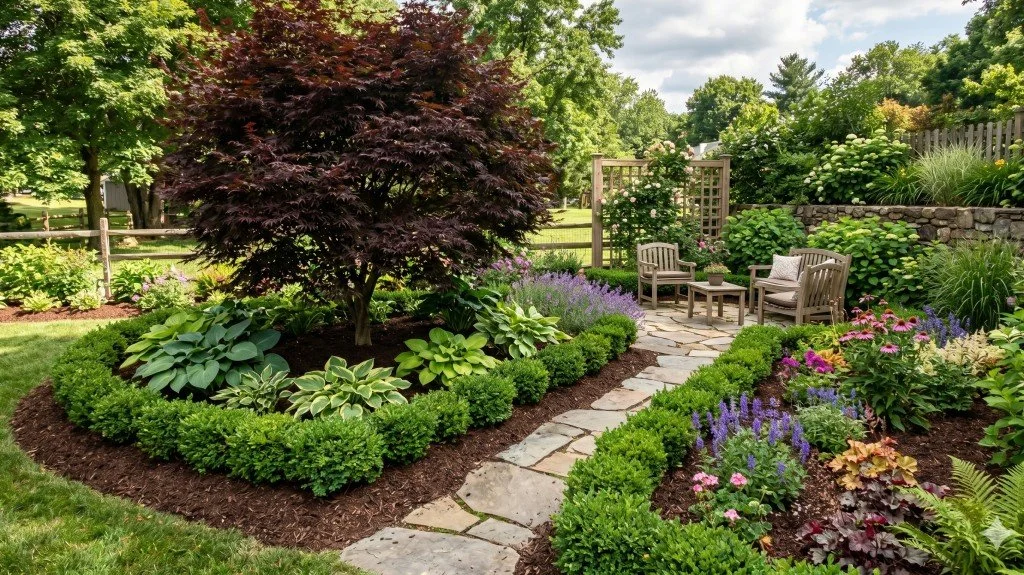
A beginner-friendly small yard design could include the following elements:
A Japanese Maple can serve as the primary focal tree and add year-round visual interest.
Boxwoods can create structure and define the edges of garden beds.
Hostas can soften borders and fill shady areas with low-maintenance foliage.
A mulched planting bed can reduce weeds and give the landscape a polished appearance.
This type of layout creates balance and visual interest without requiring extensive upkeep.
Medium Yard Layout Ideas
Medium-sized yards offer more flexibility while still benefiting from a structured design approach. Dividing the yard into distinct zones can help the space feel organized and functional without becoming overly complicated.
Medium yard layouts often work best when they include:
Defined garden zones that separate entertaining, lawn, and planting areas.
Curved planting beds that soften the landscape and create a more natural flow.
A balanced mix of shrubs, perennials, and ornamental grasses for year-round interest.
Functional outdoor spaces that connect landscaping with patios or walkways.
Using repeating plant groupings throughout the yard helps medium landscapes feel cohesive and professionally designed.
Example Medium Yard Layout
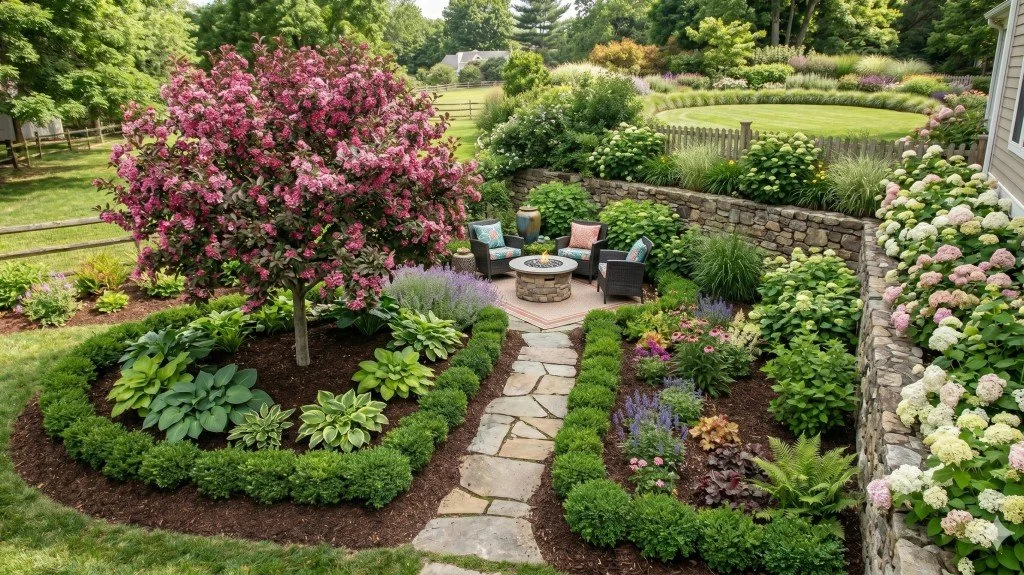
A practical medium-sized landscape design could include the following features:
Hydrangeas planted along the foundation can provide structure and long-lasting seasonal colour.
Ornamental grasses can add movement and texture throughout the landscape.
Coneflowers can introduce pollinator-friendly colour and low-maintenance blooms.
A small patio border garden can help connect outdoor living areas with the surrounding landscape.
This type of layout provides variety and seasonal interest while remaining manageable for beginner gardeners.
Large Yard Layout Ideas
Large properties can feel intimidating because there is more space to fill. However, the key to designing a low-maintenance large yard is to simplify the design using repetition, mass plantings, and larger anchor features.
Large landscapes typically benefit from the following design strategies:
Repeating the same plants throughout the property creates consistency and reduces visual clutter.
Larger anchor trees and shrubs help scale the landscape appropriately.
Privacy screening can help define outdoor spaces and create a more secluded atmosphere.
Low-maintenance mass plantings reduce mowing and simplify long-term upkeep.
Large yards often look best when they combine open lawn areas with clearly defined planting zones.
Example Large Yard Layout
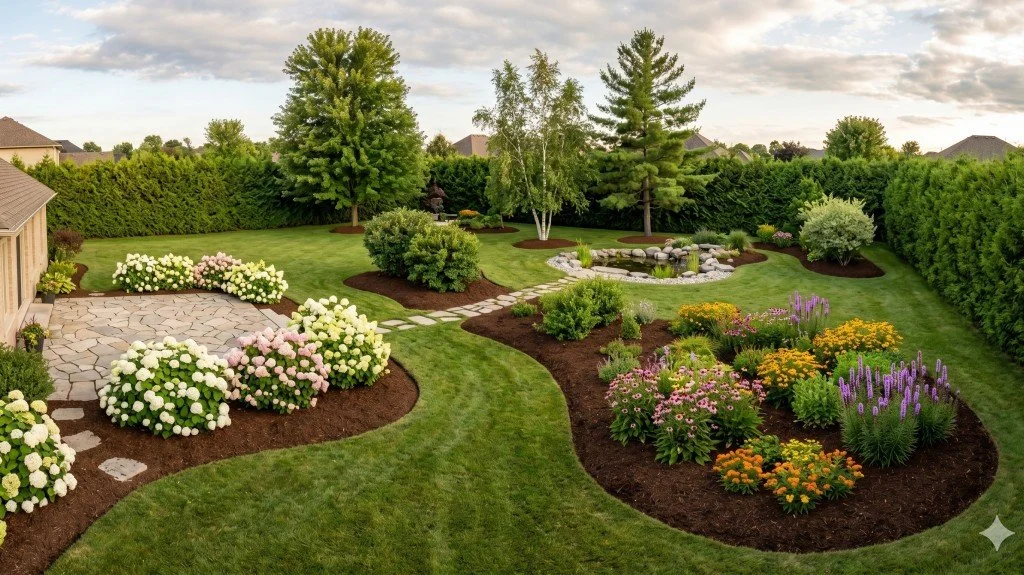
A low-maintenance large yard design could include these landscaping features:
Cedars can create natural privacy screening along property lines.
Groupings of hydrangeas can provide structure and repeated seasonal colour.
Large mulch beds can reduce lawn maintenance and suppress weeds.
A native pollinator garden section can support local wildlife while adding texture and biodiversity.
Using larger plant groupings instead of scattered individual plants helps large landscapes feel intentional and easier to maintain.
No matter the size of your property, simple layouts with clear focal points and climate-appropriate plants often create the most successful results. Starting with a manageable design makes it easier to build confidence and gradually improve your landscape over time.
6. Sample Beginner-Friendly Plant List for Niagara Gardens
Choosing reliable plants is one of the easiest ways to create a landscape that looks beautiful without requiring constant maintenance. Many beginner gardeners become overwhelmed by the huge number of plant options available, but focusing on proven, hardy varieties can simplify the process significantly.
The following plants are commonly available locally and perform well in Niagara-region growing conditions. They are also beginner-friendly choices that offer a good balance of beauty, durability, and ease of care.
Trees for Structure and Seasonal Interest
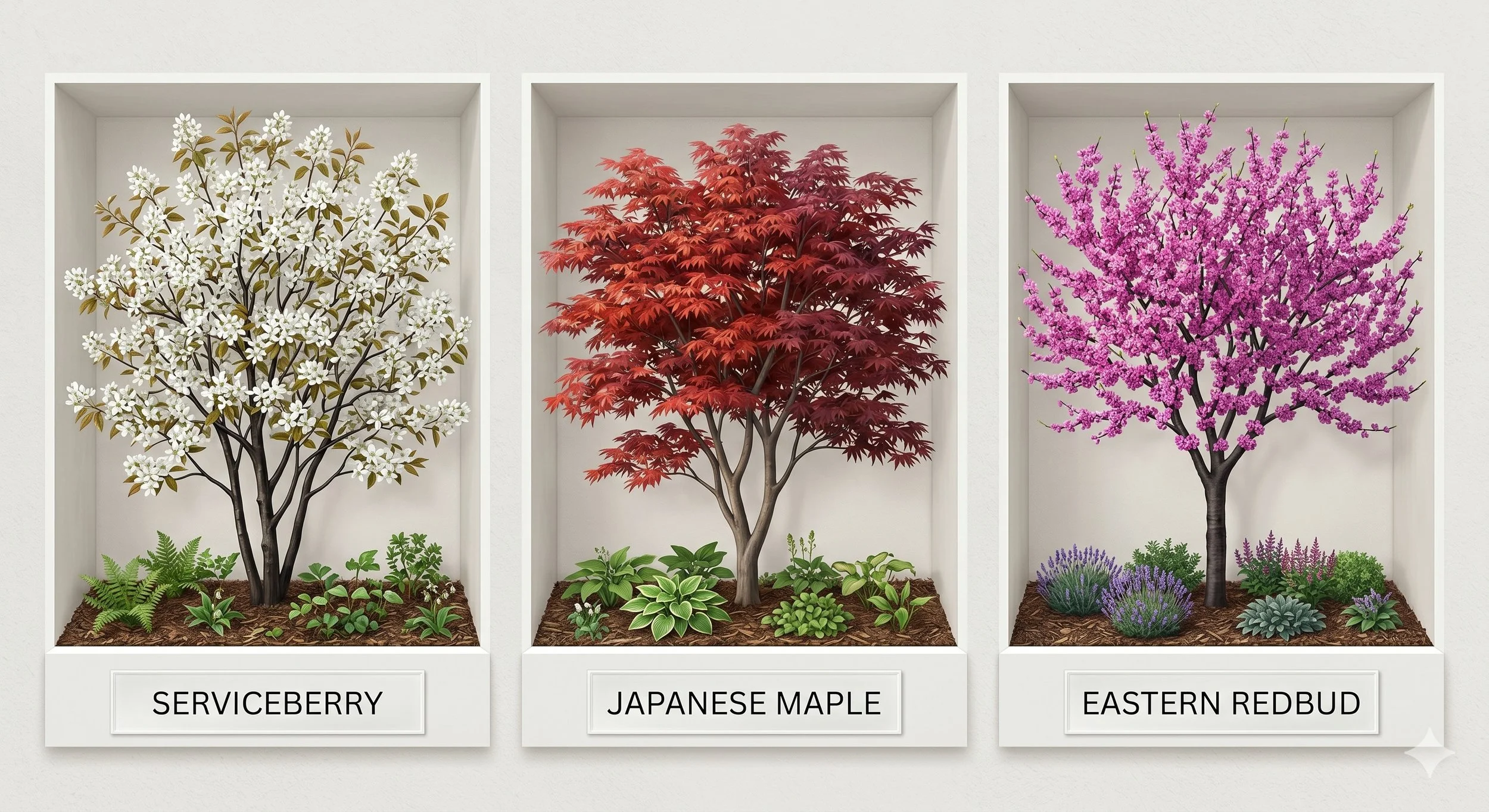
Trees help anchor a landscape and provide long-term structure, shade, and curb appeal. Smaller ornamental trees are often a great choice for beginner-friendly landscapes because they add visual impact without overwhelming the yard.
Some excellent tree options for Niagara gardens include:
Serviceberry trees provide spring flowers, edible berries for birds, and beautiful fall colour.
Japanese Maple trees add elegant texture and vibrant foliage to small and medium-sized landscapes.
Eastern Redbud trees produce colourful spring blooms and adapt well to many residential landscapes.
These trees work especially well as focal points in front yards, backyard seating areas, or layered garden beds.
Easy Shrubs for Low-Maintenance Landscaping
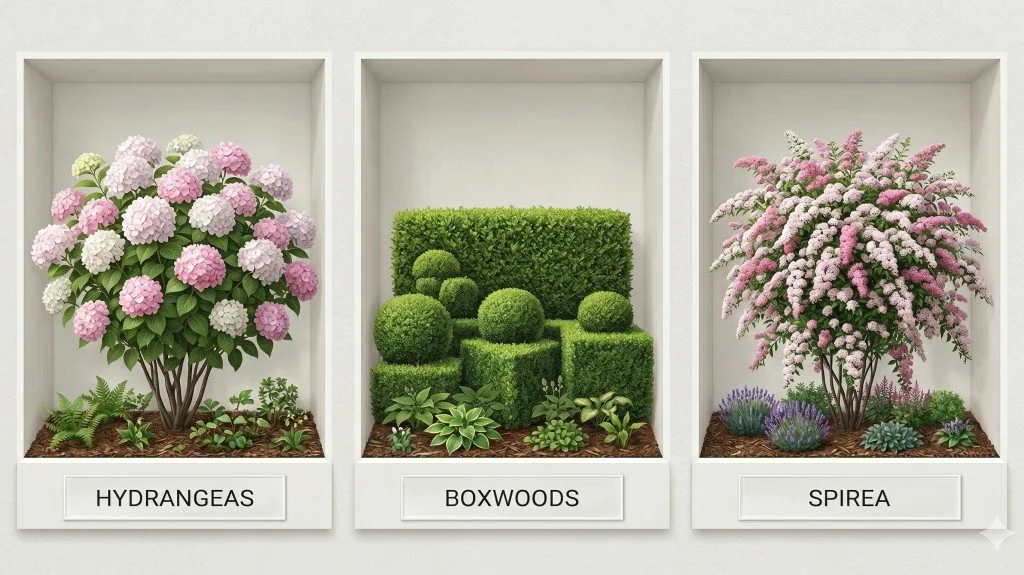
Shrubs are one of the most important parts of a low-maintenance landscape because they provide year-round structure and require relatively little care once established.
Popular beginner-friendly shrubs include:
Limelight Hydrangeas produce large blooms that provide long-lasting summer and fall colour.
Boxwoods create clean structure and evergreen interest throughout the year.
Spirea shrubs offer compact growth, seasonal flowers, and reliable cold hardiness.
Using shrubs as the foundation of your landscape helps create a more organized and polished appearance.
Reliable Perennials for Long-Lasting Colour
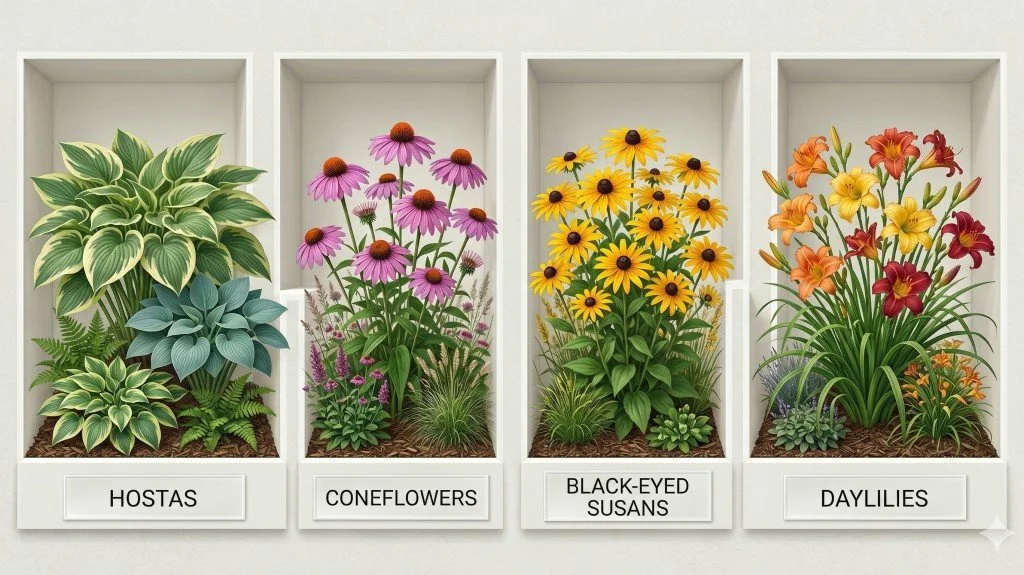
Perennials are a smart choice for beginners because they return each year and generally become fuller and healthier over time. Many hardy perennials also attract pollinators and tolerate Niagara’s changing weather conditions well.
A few dependable perennial options include:
Hostas thrive in shaded areas and provide attractive foliage with very little maintenance.
Coneflowers add bright colour, attract pollinators, and tolerate drought conditions well.
Black-eyed Susans provide cheerful blooms and reliable late-summer colour.
Daylilies are extremely hardy and adapt to many different sunlight and soil conditions.
Building your garden around hardy perennials can reduce the need for constant replanting each season.
Ornamental Grasses for Texture and Movement
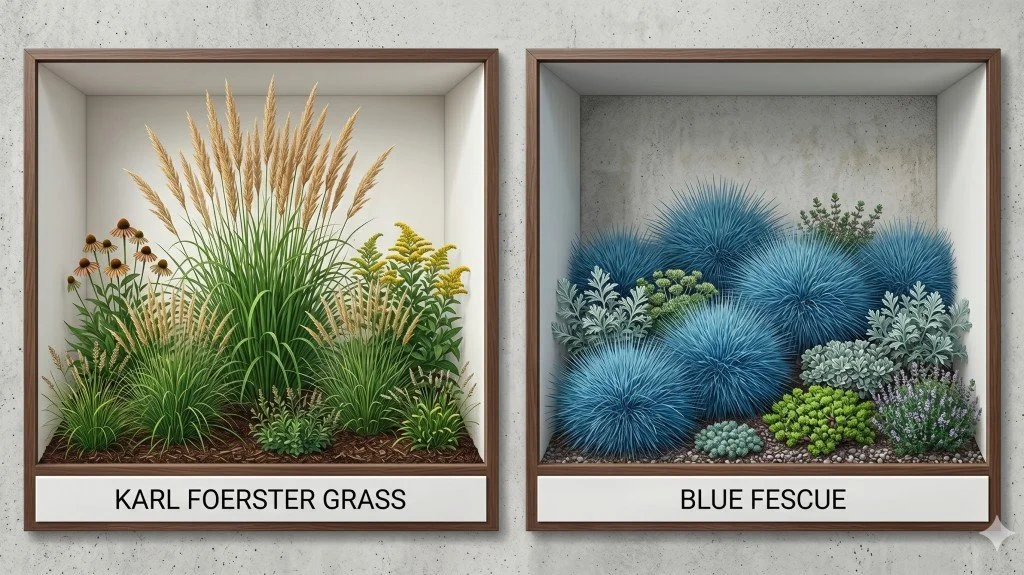
Ornamental grasses are becoming increasingly popular in modern low-maintenance landscapes because they add softness, movement, and year-round interest.
Some easy ornamental grasses to consider include:
Karl Foerster Grass provides upright structure and works well in both modern and traditional garden designs.
Blue Fescue adds compact blue-toned foliage that pairs nicely with shrubs and flowering perennials.
Ornamental grasses are particularly useful for softening hard edges and adding texture throughout the landscape.
Groundcover Plants for Weed Control
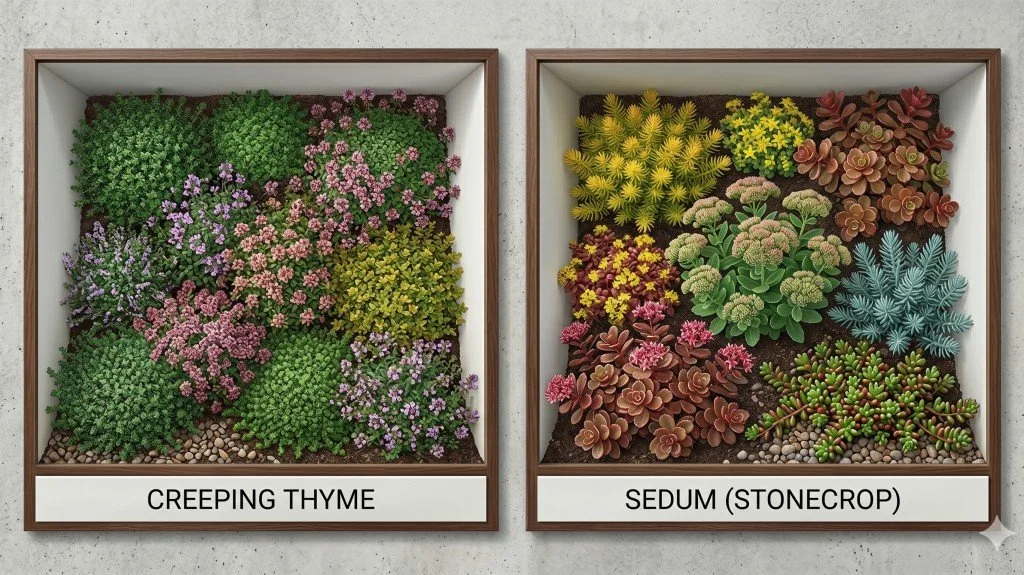
Groundcover plants can help reduce weeds, fill empty spaces, and minimize the amount of exposed soil in garden beds. Many groundcovers are low-growing, hardy, and easy to maintain.
Good beginner-friendly groundcover options include:
Creeping Thyme spreads naturally, tolerates drought, and adds fragrance and seasonal colour.
Sedum varieties provide hardy, low-growing coverage that performs well in sunny locations.
Using groundcover plants can help reduce maintenance while creating a fuller and more finished landscape appearance.
By focusing on hardy, beginner-friendly plants that thrive in Niagara’s climate, homeowners can build landscapes that remain attractive and manageable year after year. Starting with reliable trees, shrubs, perennials, and groundcover plants makes it much easier to create a yard that looks professionally designed without requiring constant work.
7. Common Beginner Landscaping Mistakes to Avoid
Every homeowner makes a few landscaping mistakes when starting out, and that is completely normal. The good news is that many common problems can be avoided with a simple plan and realistic expectations. Understanding a few beginner mistakes ahead of time can save you money, reduce frustration, and help you create a landscape that stays attractive and manageable over time.
Planting Too Close Together
One of the most common beginner mistakes is planting shrubs, trees, and perennials too close together. Plants often look small at the garden centre, but many grow significantly larger after only a few seasons.
Planting too closely together can lead to several problems:
Overcrowded plants compete for sunlight, water, and nutrients.
Poor airflow between plants can increase the risk of disease and mildew.
Overgrown beds often require excessive pruning and maintenance.
Mature plants can lose their natural shape when they do not have enough room to grow properly.
Always check the mature size of plants before installing them and allow enough spacing for future growth.
Choosing High-Maintenance Plants
Many homeowners are drawn to plants that look beautiful initially without realizing how much maintenance they require. Some plants need constant watering, pruning, deadheading, or winter protection to stay healthy.
High-maintenance plant choices can create unnecessary work for beginners:
Some flowering plants require regular trimming to continue blooming throughout the season.
Certain shrubs may need frequent shaping to maintain their appearance.
Plants that are not suited to Niagara’s climate may struggle during Ontario winters.
Large annual flower displays often require replanting and constant upkeep.
Focusing on hardy, climate-appropriate plants usually results in a healthier and easier-to-manage landscape.
Ignoring Sunlight Conditions
Another common landscaping mistake is placing plants in areas where they do not receive the proper amount of sunlight. Even low-maintenance plants can struggle when planted in the wrong location.
Before planting, it is important to observe how much sunlight different areas of the yard receive during the day.
Ignoring sunlight conditions can lead to several issues:
Sun-loving plants may become weak and leggy if planted in too much shade.
Shade plants can become scorched or stressed in intense afternoon sun.
Improper lighting conditions often reduce flowering and healthy growth.
Plants that struggle in the wrong environment usually require more maintenance and replacement.
Matching plants to the correct lighting conditions greatly improves long-term success.
Overcomplicating the Design
Many beginner landscapes become overwhelming because too many features, colours, or plant varieties are added at once. Simple landscapes often create a cleaner and more relaxing appearance.
A landscape does not need dozens of plant varieties or decorative features to look attractive.
Overcomplicated designs often create these problems:
Too many colours and textures can make the landscape feel visually cluttered.
Complex planting layouts are usually harder to maintain over time.
Excessive garden features can distract from focal plants and natural flow.
Large numbers of plant varieties often create an inconsistent appearance.
Starting with a simpler design makes landscaping feel more manageable and often produces better long-term results.
Using Too Many Plant Varieties
Another common mistake is trying to include every favourite plant in one space. While variety can add interest, too many different plants often make landscapes feel chaotic rather than cohesive.
Using fewer plant varieties often creates a more professional appearance:
Repeating the same shrubs and perennials creates visual consistency throughout the yard.
Grouping plants in clusters often looks more intentional than scattering single plants everywhere.
Fewer plant types make watering, pruning, and seasonal maintenance easier.
Repetition helps focal plants stand out more effectively.
Limiting plant selections can actually make landscapes feel more balanced and visually appealing.
Conclusion
Landscaping does not need to feel overwhelming, especially when you start with a simple plan and focus on low-maintenance choices. In many cases, the best-looking landscapes are built around straightforward layouts, repeated plant groupings, and reliable plants that thrive in local growing conditions.
By choosing climate-appropriate plants for Niagara’s environment, you can reduce watering, pruning, and seasonal upkeep while still creating beautiful outdoor spaces. Simple designs, thoughtful plant spacing, and beginner-friendly plant selections can go a long way toward building a landscape that is both attractive and easy to maintain for years to come.
Need Help Choosing the Right Plants?

Choosing the right plants can feel like one of the hardest parts of landscaping, especially when you are trying to create a low-maintenance design that will perform well in Niagara’s climate. If you are unsure where to start, getting expert guidance can make the entire process much simpler and help you avoid costly mistakes.
Visiting a local garden centre is one of the best ways to get practical advice tailored to your specific yard conditions. At Gauld Nurseries, you can get hands-on support and plant recommendations that are suited to both your landscape goals and the local growing environment.
What Gauld Nurseries Can Help You With
When you visit Gauld Nurseries, you can get guidance that makes it easier to build a successful and low-maintenance landscape from the start. Their team focuses on helping you choose plants that will thrive long-term in Niagara conditions.
They can assist you with:
Personalized plant recommendations based on your yard size, sunlight conditions, and design goals.
Low-maintenance landscaping advice that helps reduce ongoing upkeep and simplifies garden care.
Niagara climate expertise to ensure the plants you choose can handle local winters and seasonal changes.
Beginner-friendly guidance that makes it easier to plan and plant with confidence.
Native and hardy plant selections that support healthier, more resilient landscapes.
Getting professional input early in your project can help you avoid common mistakes and create a landscape that is easier to maintain and more enjoyable over time.
Final Recommendation
Whether you are redesigning your entire yard or simply refreshing a garden bed, the team at Gauld Nurseries can help you choose plants that suit your space, lifestyle, and maintenance goals.
Taking the time to get the right advice upfront can make the difference between a landscape that feels overwhelming and one that stays beautiful and easy to manage for years to come.
What Gauld Nurseries’ Customers Are Saying…
“We would highly recommend Gauld Nurseries. We've used them over the past several seasons and have been beyond satisfied each and every time. From Alex's and Paula's expertise and knowledge in planning to the many hard working crews. Everyone is professional, courteous and efficient. We absolutely love spending time outdoors enjoying the beauty of their work. They've truly transformed our yard which brings us so much joy.
There is no else we would rather call. Thank-you Gauld!”
-Lucia L.
Connect with Gardening Experts: HowtoGardenz
Connect with our gardening experts at HowToGardenz! We provide tips, tools, and reviews to help you develop your green thumb while embracing sustainable and low-maintenance gardening practices. Learn how to grow a thriving garden that’s both eco-friendly and easy to care for!
Have gardening expertise to share? Or a thriving greenhouse to showcase? Join HowToGardenz! List your products or services and connect with other plant enthusiasts who are passionate about creating sustainable, beautiful gardens. Let's spread the joy of growing together, with less effort and more impact!